
The information on this page is for educational purposes only and is not a substitute for professional medical advice, diagnosis, or treatment. Always consult a qualified healthcare provider before starting any weight loss program, diet, or exercise routine — especially if you have a medical condition, are pregnant, or are taking medication.
The snack you eat around a workout matters far less than the content on this subject usually implies. What the research keeps finding is that total daily protein and total daily calories do nearly all the work, and the timing of any single snack does very little on its own.
That is useful news, because it means you can stop worrying about a thirty-minute window and start making the choice that is actually easy to repeat. Below is what the evidence says about timing, when a pre-workout snack genuinely helps, six options that are worth eating, and the ones that quietly undo the session.
What the evidence says about timing
The “anabolic window” — the idea that protein must be consumed within roughly thirty minutes of finishing a session or the session is wasted — has been tested directly. A meta-analysis of protein timing studies found that once researchers controlled for how much protein people ate in total across the day, the apparent timing benefit disappeared. Groups that took timed protein supplements were simply eating more protein overall. Total intake, not the clock, was the strongest predictor of results.
The companion question is how much. A large meta-analysis of protein supplementation and resistance training found that intakes beyond roughly 1.6 grams per kilogram of bodyweight per day produced no further gains in fat-free mass. For an 80 kg person that is about 128 grams daily — spread across meals, not concentrated into a post-workout shake.
The practical translation: the window is measured in hours, not minutes. If you eat protein at regular intervals and hit a sensible daily total, you have already captured essentially all of the benefit that timing can offer.
When a pre-workout snack actually helps
It helps when you are training early with nothing since the previous evening, when the session is long or genuinely hard, or when you have noticed that you fade partway through. In those cases a small amount of carbohydrate an hour or so beforehand tends to make the session feel better and lets you work harder — and working harder is the part that matters.
It matters much less before a forty-five minute weights session that follows a normal meal two hours earlier. You are not short of fuel. Eating because you believe the workout requires it simply adds calories to a day you may be trying to keep in deficit.
On training fasted
A systematic review comparing resistance training in the fasted versus fed state concluded the two produce similar effects on body composition, hypertrophy and strength, with a possible small edge to fasted training on fat mass. Worth knowing: that analysis pooled only four studies, three of which carried a high risk of bias, so this is a weak signal rather than a finding to reorganise your routine around. Train fasted if you prefer it and perform well; eat first if you do not. Neither choice is the one deciding your results.
Six snacks worth eating
Figures are approximate and vary with brand and portion.
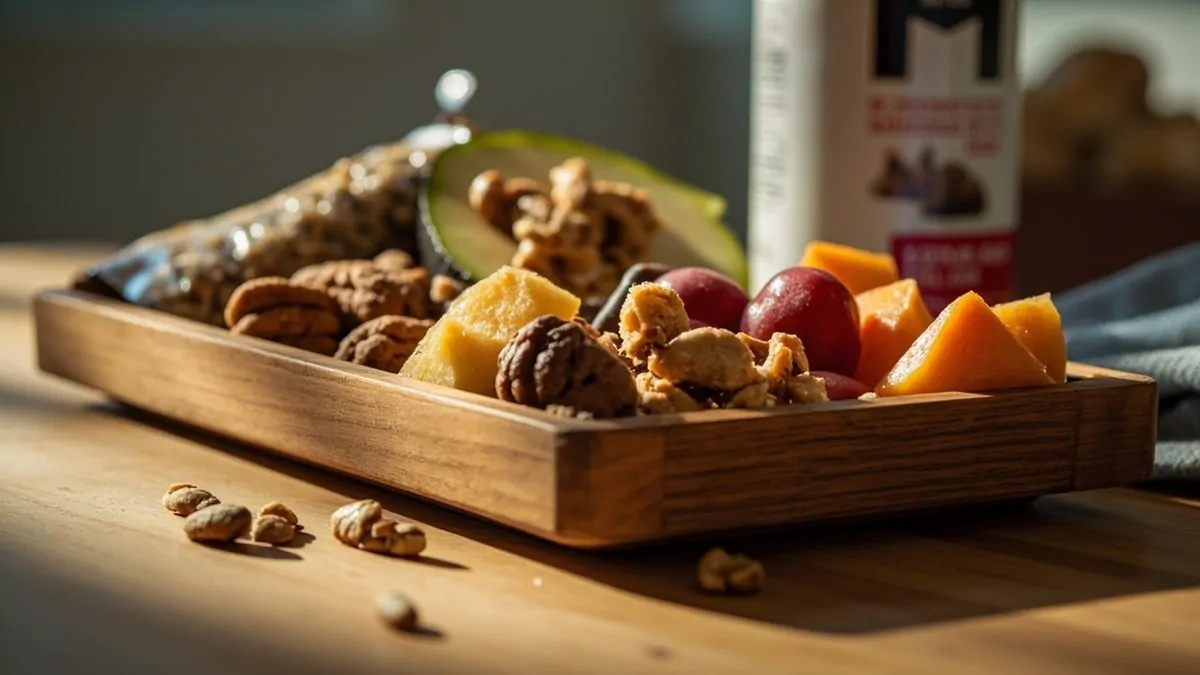
| Snack | Approx. calories | Approx. protein | Best used |
|---|---|---|---|
| Greek yogurt with a handful of berries | ~150 | ~15 g | After — high protein for the calories |
| Banana with a tablespoon of peanut butter | ~200 | ~5 g | Before — quick carbohydrate, easy to digest |
| Cottage cheese with fruit | ~180 | ~20 g | After, or last thing at night |
| Two boiled eggs and a piece of fruit | ~190 | ~13 g | Either — travels well, no preparation |
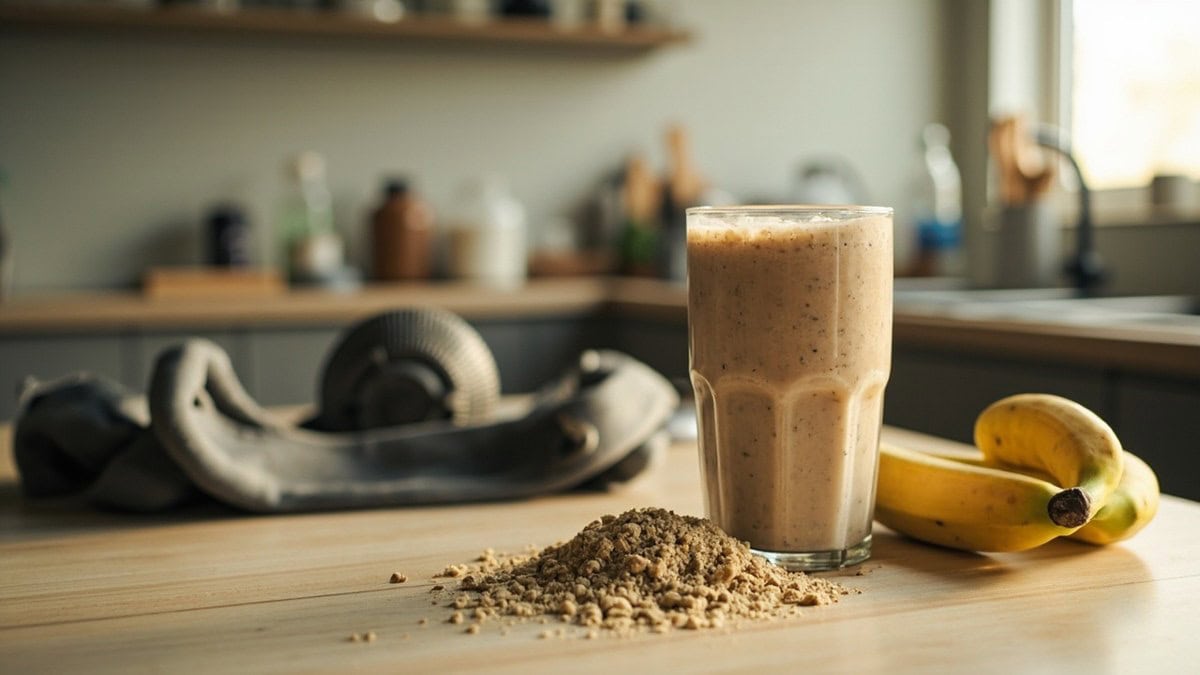
| Whey protein in milk or water | ~150-250 | ~25-30 g | After — convenience, not magic |
| Small bowl of oats with milk | ~220 | ~10 g | Before longer or harder sessions |
Notice that five of the six are ordinary food. Whey powder earns its place on convenience — it is fast, portable and precisely measured — not because it does anything a chicken breast or a tub of yogurt cannot.
What to skip
- Post-workout carbohydrate drinks after light sessions. A thirty-minute walk or an easy gym session does not deplete glycogen enough to need replacing with a sugary drink. That drink can easily exceed the calories the session used.
- Stacking a shake on top of an already adequate diet. If you are meeting your protein target, an extra shake is extra calories, not extra muscle.
- Pre-workout “fat burner” products. The stimulant may make the session feel better. The fat-burning claims attached to these products are not supported by evidence that would survive scrutiny, and some contain doses of caffeine worth knowing about before you take one.
- Eating “because you earned it”. Most sessions burn less than people estimate. A hard hour might cost 300-500 calories; a post-gym pastry and coffee can match it.

Simple timing that works
- Before: if you want something, eat it one to three hours ahead. Lean toward carbohydrate, keep fat and fibre moderate so digestion does not interfere.
- After: aim for 20-40 g of protein in the next few hours as part of a normal meal. The precise minute is not the variable that matters.
- Across the day: spread protein across three or four eating occasions rather than loading it into one.
- Hydration: plain water covers almost all sessions under an hour. Electrolyte drinks earn their place in long or very hot sessions.
Frequently Asked Questions
Do I have to eat within 30 minutes of finishing a workout?
No. When studies account for total daily protein, the timing effect largely disappears. Eating protein within a few hours as part of a normal meal captures the benefit.
Is a protein shake better than food after training?
Not nutritionally. It is faster and easier to measure, which is a real advantage if you struggle to hit your protein target. If food works for you, food is fine.
Should I eat before early-morning training?
If you perform well without it and the session is short, you do not need to. If you fade, feel lightheaded or cut sessions short, a small carbohydrate snack an hour before will likely help more than it costs.
How much protein do I actually need?
For people doing resistance training, the evidence points to around 1.6 g per kg of bodyweight per day as the point beyond which more stops adding to fat-free mass gains. Individual needs vary, and anyone with kidney disease should take this question to their doctor rather than the internet.
Do these snacks burn fat?
No food burns fat. These are useful because they support training quality and help you hit a protein target inside a calorie budget. The fat loss comes from the budget, not the snack.
Sources & References
- Aragon AA, Schoenfeld BJ — The effect of protein timing on muscle strength and hypertrophy: a meta-analysis, Journal of the International Society of Sports Nutrition
- Morton RW et al. — A systematic review, meta-analysis and meta-regression of the effect of protein supplementation on resistance training-induced gains in muscle mass and strength in healthy adults
- Resistance training performed in the fasted state compared to the fed state on body composition and strength: a systematic review with meta-analysis
- Mayo Clinic — Weight loss: Feel full on fewer calories