


Medical Disclaimer: This content is for informational purposes only. Consult a qualified healthcare professional.
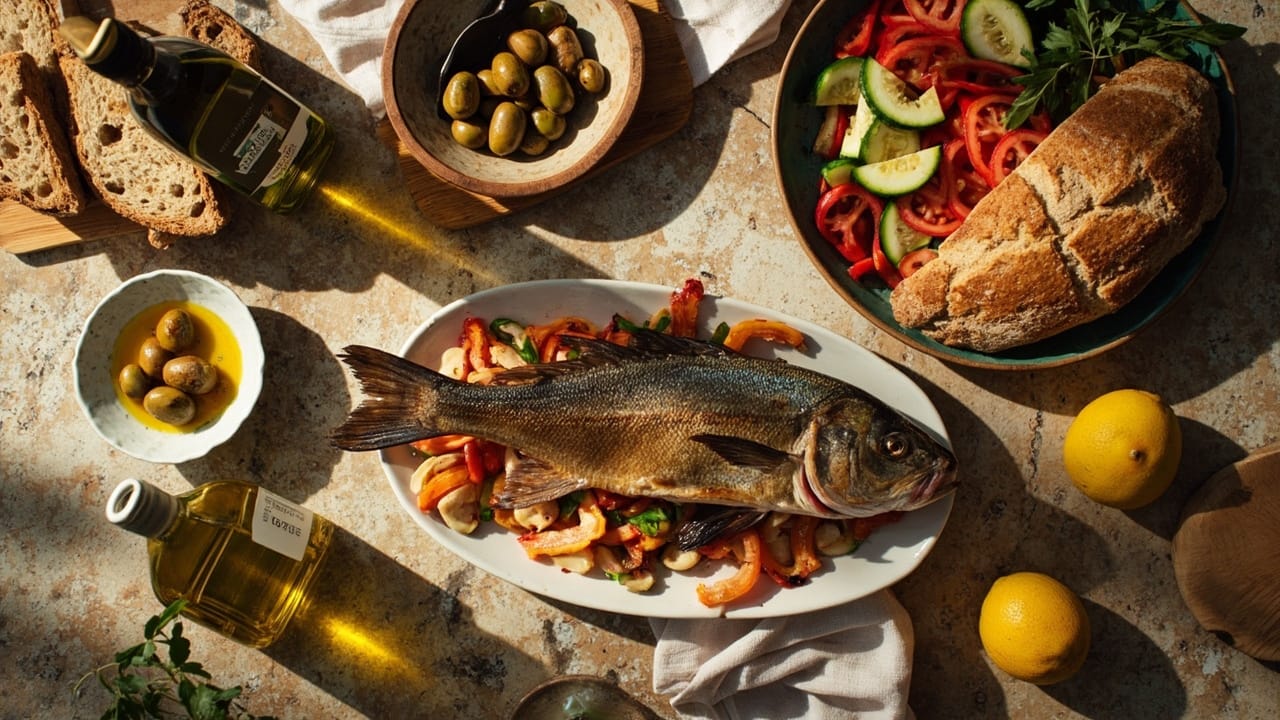

If you have ever wondered whether a Mediterranean diet for beginners is realistic or just another trend, the answer sits in fifty years of solid research. The pattern of eating from Greece, southern Italy, and coastal Spain keeps showing up at the top of every best-diet list. The American Heart Association still backs it, and a 2013 trial of 7,447 people with heart disease risk factors proved it works in real-world conditions, not just surveys.
This guide gives you the rules, a one-week meal plan, a grocery list, and the science so you can start on Monday. No calorie counting, no banned food groups, no expensive supplements. Just real food, mostly plants, and a few habits the people of the Mediterranean have used for generations.
1. Build a Clear Baseline for Mediterranean Diet For Beginners
- What Is the Mediterranean Diet, Really?
- Mediterranean Diet for Beginners: 10 Simple Rules
- The Health Science Behind the Pattern
- 7-Day Mediterranean Diet for Beginners Meal Plan
- Your First Mediterranean Grocery List
- 5 Mistakes Beginners Make on the Mediterranean Diet
- Eating Mediterranean on a Real Budget
- Adding Walking to the Mediterranean Lifestyle
- Frequently Asked Questions
-
Mediterranean Diet for Beginners: 10 Simple Rules
Most beginners do best when they start with a small set of habits instead of trying to overhaul the kitchen in one weekend. These ten rules are the same ones the Harvard School of Public Health uses in its Mediterranean diet review. Print the list and tape it to your fridge.
- Make olive oil your main added fat. Replace butter and vegetable oil with extra-virgin olive oil for cooking, dressings, and drizzling.
- Eat vegetables at every meal. Aim for at least two cups at lunch and dinner, plus leafy greens on the side.
- Use whole grains instead of refined grains. Switch white bread and white rice to 100% whole wheat, oats, farro, barley, or brown rice.
- Eat fruit for dessert most days. A piece of whole fruit beats cookies, candy, and most packaged snacks.
- Add a serving of beans or legumes every day. Lentils, chickpeas, black beans, and white beans are the foundation of Mediterranean protein.
- Include fish twice a week. Fatty fish like salmon, sardines, and mackerel give you omega-3 fatty acids that support heart and brain health.
- Choose poultry and eggs in smaller amounts than fish. Two to three servings a week keeps you full without crowding out fish.
- Limit red meat to a few times a month. Save it for special meals rather than everyday dinners.
- Snack on nuts and seeds. A small handful of walnuts, almonds, or pumpkin seeds beats chips and crackers.
- Drink water as your main beverage. Skip sugary drinks and limit juice. A glass of wine with a meal is optional, not required.
If you only master five of these rules in your first month, you will still be eating in a way that matches the bulk of the research. The Mediterranean diet for beginners gets easier with each habit you layer on. Aim to add one or two new behaviors every two weeks instead of trying to do all ten at once.
The Health Science Behind the Mediterranean Diet for Beginners
The reason the Mediterranean diet for beginners has stayed popular for thirty years is the science behind it. Three major studies stand out and they were all done by independent research teams at different universities. Beginners who start the Mediterranean diet for beginners today are stepping into a pattern that has been tested in randomized trials, cohort studies, and meta-analyses for over a generation.
The PREDIMED trial ran in Spain from 2003 to 2011 and enrolled 7,447 men and women between ages 55 and 80. None of them had heart disease at the start, but they all had risk factors like diabetes, high blood pressure, or a family history of heart attack. Researchers split them into three groups.
One group ate a Mediterranean diet plus extra-virgin olive oil. Another group ate a Mediterranean diet plus mixed nuts. The third group got standard advice to reduce fat.
The trial was supposed to last longer, but the results were so clear that the safety board stopped it early after a median of 4.8 years.
The numbers told the story. The group eating a Mediterranean diet with extra-virgin olive oil had a 30% lower rate of major cardiovascular events. The group eating a Mediterranean diet with mixed nuts had almost the same reduction.
Stroke deaths dropped by about 30% in both Mediterranean groups.
You can read the full paper in the PREDIMED trial entry on PubMed and verify the details there.
Long before PREDIMED, the Harvard T.H. Chan School of Public Health tracked 26,000 women for twelve years and found that the women who followed a Mediterranean diet had a 25% lower risk of cardiovascular disease. A separate meta-analysis of 16 studies covering more than 22,000 women showed a 24% lower cardiovascular risk and 23% lower risk of premature death.
A study of 10,670 women in the Nurses’ Health Study found that those who ate the Mediterranean way were 46% more likely to age without major chronic disease.
The diet also preserved telomere length, a marker of biological aging, in a separate cohort of 4,676 middle-aged women.
One of the most interesting findings came from a six-year weight loss trial where the Mediterranean diet group kept the weight off longer than any other diet group. The Harvard review of that trial points to a simple reason: the high monounsaturated fat from olive oil and the fiber from vegetables and legumes create long-lasting fullness, so people stick with it. That is the real measure of a successful eating pattern.
7-Day Mediterranean Diet for Beginners Meal Plan
The following plan is roughly 1,800 to 2,000 calories per day and follows the Harvard sample. Each meal leans on whole foods you can find at any grocery store. Adjust portions up or down based on your hunger and activity level.
Day 1 — Monday
- Breakfast: 1 cup cooked steel-cut oats, 2 tablespoons chopped walnuts, 3/4 cup fresh blueberries, sprinkle of cinnamon
- Snack: 1 medium apple and 1 tablespoon almond butter
- Lunch: Chickpea and farro salad with cucumber, tomato, parsley, lemon juice, and 2 tablespoons olive oil
- Snack: 1 small orange
- Dinner: 4 ounces grilled salmon, 1 cup roasted broccoli and red pepper, 1/2 cup quinoa drizzled with olive oil
Day 2 — Tuesday
- Breakfast: Greek yogurt (plain, 2%) with sliced peaches, 1 tablespoon honey, 1 tablespoon chia seeds
- Snack: 1/4 cup mixed nuts and a small pear
- Lunch: White bean and kale soup with a slice of whole-grain bread rubbed with garlic
- Snack: Carrot and celery sticks with hummus
- Dinner: Shrimp and zucchini noodles in a fresh tomato-basil sauce, side of arugula salad
Day 3 — Wednesday
- Breakfast: Whole-grain toast with mashed avocado, sliced tomato, hard-boiled egg, sprinkle of feta
- Snack: 1 cup grapes
- Lunch: Lentil salad with red onion, cucumber, mint, olive oil, and lemon
- Snack: Small bowl of olives and a few whole-grain crackers
- Dinner: Baked cod with lemon and herbs, 1 cup roasted eggplant, 1/2 cup brown rice
Day 4 — Thursday
- Breakfast: Smoothie with spinach, banana, frozen berries, Greek yogurt, 1 tablespoon ground flaxseed
- Snack: 1 medium orange and a small handful of walnuts
- Lunch: Tuna salad made with olive oil, capers, red onion, on a bed of mixed greens
- Snack: 1 ounce 75% dark chocolate and 5 almonds
- Dinner: Chicken souvlaki with Greek salad and a side of tzatziki
Day 5 — Friday
- Breakfast: Steel-cut oats with sliced strawberries, 1 tablespoon slivered almonds, dash of cinnamon
- Snack: Sliced cucumber with tzatziki
- Lunch: Mediterranean bowl with brown rice, roasted chickpeas, roasted vegetables, tahini dressing
- Snack: 1 small apple
- Dinner: Sardines on whole-grain toast with sliced tomato, arugula, and lemon; side of roasted red pepper
Day 6 — Saturday
- Breakfast: Two-egg veggie omelet with spinach, tomato, and feta; side of sliced melon
- Snack: 1/4 cup pistachios
- Lunch: Whole-grain pita stuffed with hummus, grilled vegetables, and a small amount of feta
- Snack: Greek yogurt with honey and walnuts
- Dinner: Baked chicken thighs with lemon and rosemary, 1 cup roasted Brussels sprouts, 1/2 cup barley
Day 7 — Sunday
- Breakfast: Whole-grain pancakes (made with oats or whole wheat) topped with sliced banana and a drizzle of pure maple syrup
- Snack: 1 cup blueberries
- Lunch: Minestrone soup with white beans, whole-grain bread, small side salad with olive oil and vinegar
- Snack: A few slices of cantaloupe wrapped in prosciutto
- Dinner: Whole-wheat pasta with shrimp, garlic, olive oil, cherry tomatoes, and fresh basil; small green salad
Drink water with every meal. Skip sugary drinks and sweetened coffee. If you drink alcohol, a 5-ounce glass of red wine with dinner is the traditional choice.
Non-alcoholic red wine and sparkling water with lemon are good substitutes.

Your First Mediterranean Grocery List
Shopping the Mediterranean way starts with a simple list. Most of these foods are in the perimeter of the grocery store and many are pantry staples you can keep on hand for weeks. Build your list around these categories.
Fresh produce: tomatoes, cucumbers, bell peppers, zucchini, broccoli, cauliflower, eggplant, leafy greens (spinach, kale, arugula, romaine), onions, garlic, lemons, carrots, celery, sweet potatoes, fresh herbs (basil, parsley, mint, rosemary, thyme).
Fruits: apples, oranges, bananas, berries (fresh or frozen), grapes, peaches, melon, pears.
Whole grains: rolled oats, steel-cut oats, whole-wheat bread, whole-wheat pasta, brown rice, quinoa, farro, barley, bulgur.
Legumes and beans: canned chickpeas, canned white beans, canned black beans, dried lentils, dried split peas.
Proteins: fresh salmon, sardines (canned is fine), fresh cod or other white fish, shrimp, chicken thighs and breasts, eggs.
Dairy: plain Greek yogurt, feta cheese, fresh mozzarella, aged hard cheese (Parmesan or Manchego), small amounts of ricotta.
Pantry fats and extras: extra-virgin olive oil, olives, raw nuts (walnuts, almonds, pistachios), tahini, raw honey, dark chocolate (70%+ cacao), canned tomatoes, tomato paste, low-sodium vegetable broth.
Herbs and spices: dried oregano, basil, thyme, rosemary, cinnamon, black pepper, cumin, paprika, sumac (optional but traditional).
Buy olive oil in dark glass bottles and store it away from heat. Choose “extra-virgin” and “cold-pressed” on the label. The flavor will be richer and the polyphenol content will be higher.
If a brand you trust is on sale, stock up. Olive oil keeps for about 18 to 24 months once opened.
5 Mistakes Beginners Make on the Mediterranean Diet
The pattern is forgiving, but a few common missteps can stall your progress or keep you from getting the full benefits. Avoid these five pitfalls and you will do better than most beginners.
Mistake 1 — Pouring olive oil without measuring. Olive oil is healthy, but it is still calorie-dense at 120 calories per tablespoon. A healthy dose is about 1 to 2 tablespoons per meal.
Measure it for the first few weeks until your eye adjusts.
A Mediterranean diet for beginners approach that treats olive oil as unlimited will not produce weight loss even with all the right foods.
Mistake 2 — Skipping the vegetables. Many beginners focus on olive oil, fish, and whole grains and forget the vegetables when they start the Mediterranean diet for beginners. Aim for at least 4 to 5 cups of non-starchy vegetables per day.
That is where the fiber, antioxidants, and micronutrients live.
Mistake 3 — Calling pasta “Mediterranean” by itself. A bowl of plain white pasta with marinara is Italian-American, not Mediterranean diet for beginners. Whole-wheat pasta with vegetables, legumes, and a small amount of olive oil is closer.
Keep portions to about 1 cup cooked per meal and always pair with vegetables or legumes.
Mistake 4 — Treating the wine rule as required. Wine is optional in the Mediterranean diet for beginners. If you do not drink, do not start.
If you do drink, keep it to one glass per day for women and up to two for men, always with food.
People with liver disease, certain cancers, or a history of alcohol problems should skip it.
Mistake 5 — Eating processed “Mediterranean” snacks. The grocery shelves are now full of chips, crackers, and frozen meals labeled “Mediterranean.” Read the labels. If it has a long ingredient list, refined flour, or added sugar, put it back.
Real Mediterranean diet for beginners food rarely comes in a package.
Eating the Mediterranean Diet for Beginners on a Real Budget
Many beginners assume the Mediterranean diet for beginners costs more than what they currently spend. It does not have to. A few shifts in where you spend keep the bill in line.
The Mediterranean diet for beginners is built on affordable staples like beans, oats, and seasonal produce, which keeps weekly grocery costs reasonable for most households.
Beans and lentils are the cheapest source of protein in any grocery store. A 1-pound bag of dried lentils costs about $2 and feeds a family of four for two meals. Canned beans are about $1 per can and are just as healthy if you rinse off the salty liquid.
Use them in soups, salads, pasta dishes, and grain bowls all week long.
Buy frozen fish when fresh is too expensive. Frozen salmon and cod keep their omega-3 content and cook just as well. Canned sardines and tuna are shelf-stable and packed with protein.
A few cans in the pantry means you always have a quick lunch.
Shop the sales for fresh produce and buy what is in season. Berries are expensive in winter. Citrus is cheap.
Tomatoes cost less in August. Cabbage, carrots, onions, and apples are budget staples year-round. Frozen vegetables are just as healthy as fresh and cost less.
Buy olive oil in larger cans (3 liters) when you can find them and store them away from light. A 3-liter tin can cost about $35 and last a couple of months for a family of four. The price per tablespoon is much lower than the small bottles.
Cook at home. Restaurant Mediterranean food is delicious but expensive. A simple chickpea soup with vegetables costs about $8 to make and serves four.
The same meal at a restaurant costs $60 or more.

Adding Walking to the Mediterranean Lifestyle
The Mediterranean diet is more than a list of foods. It includes daily movement, social meals, and a slower pace at the table. The Mediterranean diet for beginners works best when you treat exercise and community as part of the plan, not as add-ons.
Walking after dinner is one of the most common habits in the regions the Mediterranean diet for beginners comes from.
You do not need a gym membership. Aim for 30 minutes of moderate movement most days. A brisk walk, a bike ride, or a swim all count.
The American Heart Association recommends 150 minutes of moderate aerobic activity per week, which works out to about 20 minutes a day.
Pair your walking habit with the Mediterranean diet for beginners and you get the full lifestyle. Several studies of older adults in Greece and Spain found that combining the Mediterranean diet for beginners with daily activity led to better cognitive scores and lower risk of frailty than the Mediterranean diet for beginners alone.
Make it social when you can. Eating meals with friends and family, taking a walk with a neighbor, or cooking dinner with your kids are all part of the pattern. The original Mediterranean Diet Pyramid had a foundation that included not just food but also “enjoyable physical activity” and “social interaction.” Those pieces matter.
Frequently Asked Questions
How much weight can I lose on the Mediterranean diet for beginners?
Most beginners lose 1 to 2 pounds per week when they keep portion sizes steady and add daily movement. The PREDIMED trial was not designed as a weight loss study, but the long-term weight loss trial cited by the Harvard T.H. Chan School showed participants kept the weight off for six years.
The Mediterranean diet for beginners works best for slow, steady loss that you can maintain.
Is the Mediterranean diet safe for people with diabetes?
Yes. The American Heart Association and the American Diabetes Association both endorse the pattern. The high fiber and monounsaturated fat content helps stabilize blood sugar. People with diabetes should still monitor their carbohydrate portions and consult their doctor for medication adjustments.
Do I need to buy special olive oil for the Mediterranean diet for beginners?
Look for “extra-virgin” olive oil in a dark glass bottle. The “extra-virgin” label means the oil comes from the first pressing and has the most polyphenols. Cold-pressed is another good marker.
Avoid “light” or “pure” olive oil, which is more refined and lower in antioxidants.
Can I eat bread on the Mediterranean diet?
Yes, but choose whole-grain bread and keep portions small. A slice or two with a meal is normal in Mediterranean countries. Skip white bread and oversized loaves.
Traditional sourdough and whole-grain pita are good choices.
What about cheese and yogurt on the Mediterranean diet?
Both are part of the pattern. Plain Greek yogurt is the most common breakfast choice. A small amount of feta, Parmesan, or fresh mozzarella adds flavor without a lot of calories.
Limit portion size to about 1 to 2 ounces per meal.
How long before I see health benefits from the Mediterranean diet for beginners?
Most studies show measurable changes in blood pressure, blood sugar, and cholesterol within 8 to 12 weeks. Weight loss usually shows within the first month. The long-term benefits for cardiovascular health and healthy aging build up over years, not weeks.
Is the Mediterranean diet good for beginners who do not cook?
Yes. Many Mediterranean diet for beginners staples need no cooking: Greek yogurt with fruit and nuts, hummus with raw vegetables and pita, tuna packed in olive oil over greens, canned beans tossed with cherry tomatoes and lemon. A beginner can build a Mediterranean diet for beginners lunch in 5 minutes without ever turning on the stove.
What is the easiest first step for the Mediterranean diet for beginners?
The single easiest first step is to swap the butter on your morning toast for extra-virgin olive oil. That one change puts the Mediterranean diet for beginners in motion without changing any other meal. Once that habit sticks for a week or two, add a serving of beans to your lunch and a serving of fish to your dinner.
Three habits over three weeks is enough to start seeing the benefits of the Mediterranean diet for beginners on your blood work and energy.
Does the Mediterranean diet for beginners work for vegetarians?
Yes. The Mediterranean diet for beginners is naturally friendly to vegetarians because the foundation is plants, beans, and whole grains. Eggs and dairy add protein when fish is not on the menu. Many traditional Mediterranean meals from Greece and the Levant are fully plant-based, including hummus, tabbouleh, lentil soup, and chickpea stews.
Related Reading on WeightLossFull
- 10 Metabolism Boosting Foods for Beginners — pair these picks with the Mediterranean approach for a stronger baseline.
- Keto Meal Plan for Beginners: 7-Day Starter Guide — compare low-carb vs. Mediterranean for your goals.
- Low Carb Meal Plan for Beginners — another eating pattern that beginners often compare with the Mediterranean style.
- Balanced Meals Benefits for Weight Loss — see why balanced plates are at the core of every reliable weight loss plan.
- How to Build Nutritious Meals for Weight Loss — practical tips on building Mediterranean-style plates at home.
The Bottom Line
The Mediterranean diet for beginners is one of the few eating patterns with decades of peer-reviewed research behind it. The PREDIMED trial showed a 30% reduction in major cardiovascular events. The Harvard cohorts showed lower rates of chronic disease and slower biological aging.
The American Heart Association keeps it on the recommended list. It does not require a single branded food, a strict calorie target, or a forbidden list of ingredients.
Start with the ten rules. Build a weekly meal plan using the grocery list as your anchor. Replace butter with olive oil.
Add a serving of beans every day. Eat fish twice a week. Walk after dinner.
The weight will come down, the cholesterol numbers will improve, and the meals will taste better than what most Americans eat now. The Mediterranean diet for beginners rewards consistency, not perfection.
You can start the Mediterranean diet for beginners this week. Pick three recipes from the meal plan, shop for the ingredients, and make lunch on Monday. The habit you build on day one is the same habit that helped a 7,447-person clinical trial cut heart attack and stroke rates by 30%.
Mediterranean diet for beginners is not a 30-day reset. It is a way of eating that fits the rest of your life.
Authoritative Sources
This guide on mediterranean diet for beginners references research and recommendations from CDC Healthy Eating Mayo Clinic Weight Loss Basics. These sources provide the clinical and scientific foundation for the strategies discussed above.