High Protein Breakfast for Weight Loss Guide: Amazing Tips 2026

Medical Disclaimer: This content is for informational purposes only. Consult a qualified healthcare professional.
Two things are true at once, and most breakfast advice only tells you one of them. Eating breakfast does not, by itself, make you lose weight — pooled trial data is clear on that. But if you do eat breakfast, the amount of protein in it changes how the rest of your day goes, in ways that have been measured rather than assumed.
This guide covers what the trials actually found, how much protein a breakfast needs before the effect shows up, and eight realistic options with their protein counts. Figures are approximate and vary with brand and portion size.
Does eating breakfast help you lose weight?
On its own, no. A systematic review pooling ten randomised controlled trials found no discernible effect of eating versus skipping breakfast on body weight or body composition. The pooled difference in body weight was 0.17 kg, with a confidence interval running from −0.40 to 0.73 — a result centred on nothing.
So “eat breakfast to lose weight” is not supported. The useful question is different: if you are going to eat in the morning, what should be on the plate?
What a high-protein breakfast actually does
Here the evidence gets more interesting. In a controlled trial comparing a 35-gram protein breakfast against a normal 13-gram one and against skipping breakfast entirely, the high-protein version produced effects the others did not:
- Greater perceived fullness sustained through the afternoon, not just the morning
- Suppressed ghrelin (the hunger hormone) and elevated peptide YY (a fullness hormone) across the whole day
- Roughly 170 fewer calories eaten in evening snacking, mostly through fewer high-fat choices
One caveat worth stating plainly, because most articles omit it: that trial studied overweight adolescent girls who habitually skipped breakfast. The mechanism is well supported across the wider protein literature, but the exact numbers come from a specific group, and you should not expect 170 calories to be your personal figure.
There is a second, smaller effect. Protein costs more energy to digest than other macronutrients — 20 to 30 percent of its calories, against 5 to 10 percent for carbohydrate and 0 to 3 percent for fat. Real, but modest. The appetite effect is the one that matters.
How much protein does breakfast need?
The trials showing meaningful appetite effects used 30 grams or more. Below about 20 grams, you are eating a normal breakfast with a protein garnish. A sensible target is 25 to 40 grams, which is also roughly the amount the body can use well in one sitting.
Set that against your daily total. For people doing resistance training, the evidence points to around 1.6 grams per kilogram of bodyweight per day as the point beyond which more stops helping. Breakfast is one of three or four opportunities to get there — not a target in isolation.

Eight breakfasts that hit the mark
| Breakfast | Approx. protein | Notes |
|---|---|---|
| Three scrambled eggs, wholegrain toast | ~22 g | Add an egg white or two to push past 25 g |
| Greek yogurt (170 g) with berries and nuts | ~20 g | No cooking; check the pot — some are half the protein |
| Cottage cheese (200 g) with fruit | ~24 g | Cheapest protein per gram on this list |
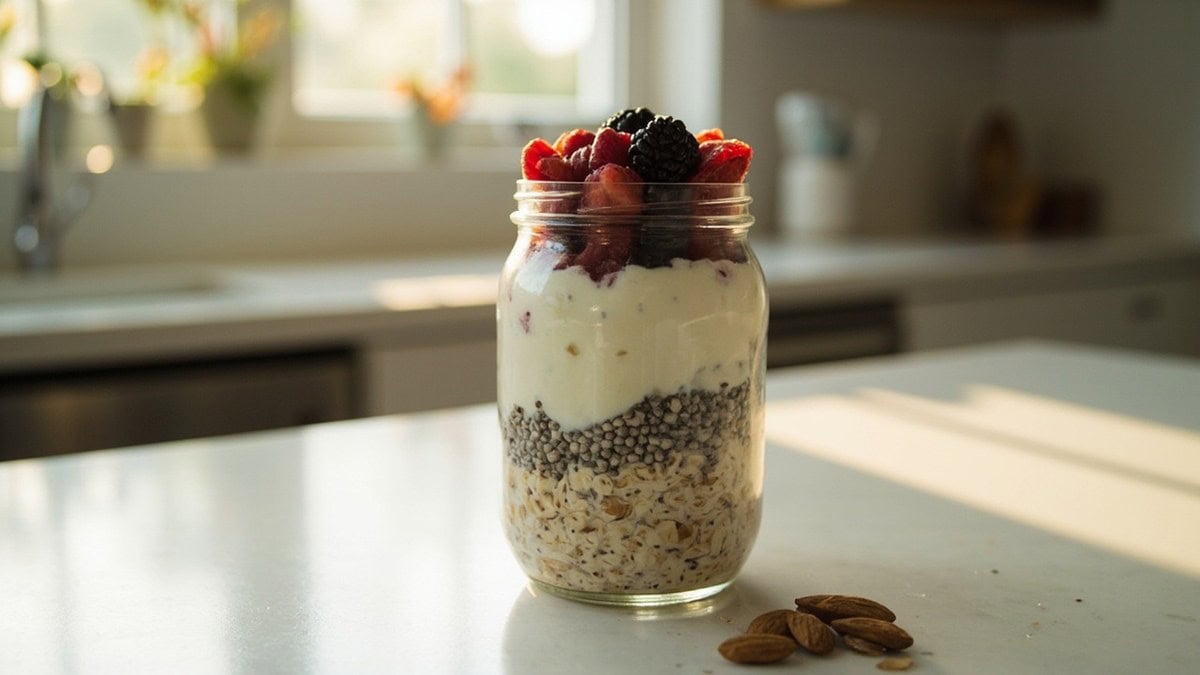
| Overnight oats with milk and a scoop of whey | ~30 g | Made the night before, eaten cold |
| Two-egg omelette with cheese and spinach | ~24 g | Five minutes, one pan |
| Smoked salmon (75 g) with two poached eggs | ~28 g | The expensive option, and the most satiating |
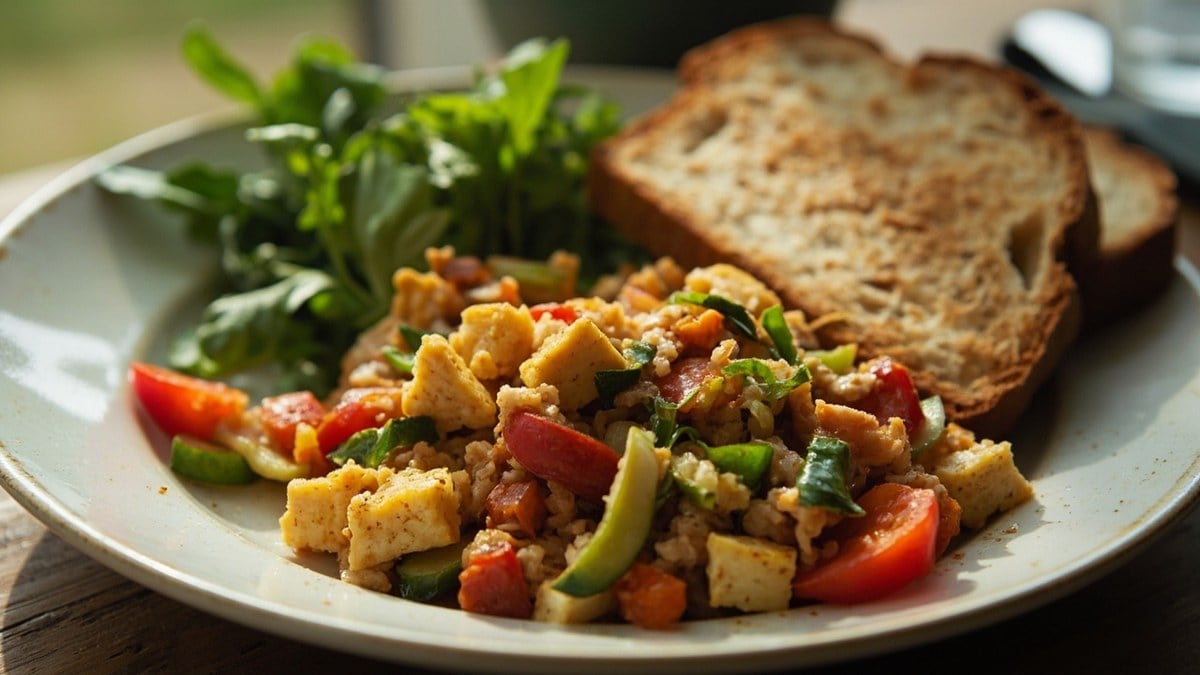
| Tofu scramble (200 g firm tofu) with toast | ~24 g | Plant-based, holds up well reheated |
| Blended shake: whey, banana, oats, milk | ~32 g | For mornings when chewing is too much to ask |
Six of the eight need no real cooking, which matters more than the protein figures: the breakfast you actually eat on a Tuesday beats the one you plan on a Sunday.
Making it work on a weekday morning
- Decide the night before. Overnight oats, a portioned yogurt, eggs already boiled. Morning decisions are the ones that get skipped.
- Batch what you can. Six boiled eggs on Sunday covers three breakfasts. A tray of egg muffins covers five.
- Keep a no-effort fallback. Cottage cheese and fruit needs a spoon. That’s the point.
- Do not let it become a project. If a high-protein breakfast takes twenty minutes you will abandon it by week three, which is worse than a modest breakfast you keep eating.
What doesn’t help
- “High protein” cereals and bars that deliver 6 to 10 grams. The label is marketing; check the number per serving, and check the serving size.
- Skipping breakfast and calling it discipline if it ends in an oversized lunch. Intermittent fasting works for some people, but only when total intake actually falls.
- Fruit juice and smoothies without a protein source. Fast to drink, gone quickly, little staying power.
- Adding protein on top of an unchanged breakfast. The benefit comes from protein replacing other calories, not from piling a shake on toast and jam.
Frequently Asked Questions
Do I have to eat breakfast to lose weight?
No. Pooled trial data shows no weight difference between eating and skipping it. Eat breakfast if you prefer it or if skipping leaves you ravenous later; skip it if that suits you and your total intake stays where you want it.
How much protein should a weight-loss breakfast have?
Aim for 25 to 40 grams. The trials that showed real appetite effects used 30 grams or more, and below about 20 grams the effect largely disappears.
Are eggs the best high-protein breakfast?
They are convenient, cheap and around 6 to 7 grams each, but three eggs is only about 20 grams — less than most people assume. Pair them with something else, or add whites, if you want to clear 30.
Can I get enough protein at breakfast without meat or dairy?
Yes. Tofu scramble, soy yogurt, tempeh, and a plant protein powder in oats all reach the range. Plant sources are usually less protein-dense by weight, so portions need to be a little larger.
Will a high-protein breakfast stop me snacking at night?
It reduced evening snacking in the trial described above, by about 170 calories, in a specific group. It is a reasonable thing to try, not a guarantee — and if night eating is driven by stress or restriction rather than hunger, breakfast is not the lever that fixes it.
Sources & References
- Eating versus skipping breakfast has no discernible effect on obesity-related anthropometric outcomes: a systematic review and meta-analysis
- Leidy HJ et al. — Beneficial effects of a higher-protein breakfast on the appetitive, hormonal and neural signals controlling energy intake regulation, American Journal of Clinical Nutrition
- Morton RW et al. — Protein supplementation and resistance training-induced gains in muscle mass and strength: a systematic review and meta-analysis
- Examine.com — Thermic effect of food
Medical Disclaimer: This article is for informational purposes only and does not constitute medical advice. Consult a qualified healthcare provider before starting any weight loss program.