Five Ingredient Dinners: 7 Proven, Delicious Recipes for 2026
Five ingredient dinners cut weeknight cooking down to the parts that actually matter: protein, vegetables, a starch, a fat, and a flavor hit. When the shopping list is short, the prep is short, the cleanup is short, and the odds that you actually cook instead of ordering delivery go up dramatically.

This guide builds a working rotation of five ingredient dinners you can make tonight, then walks through how to stock the kitchen so the rotation never breaks.
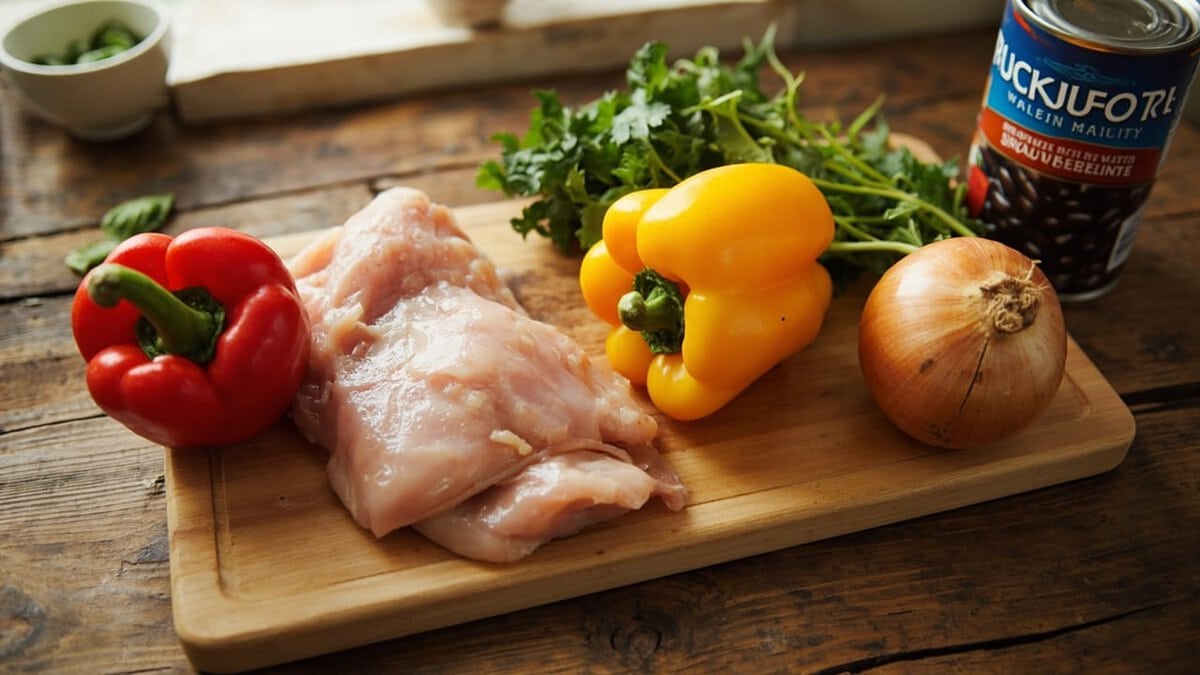
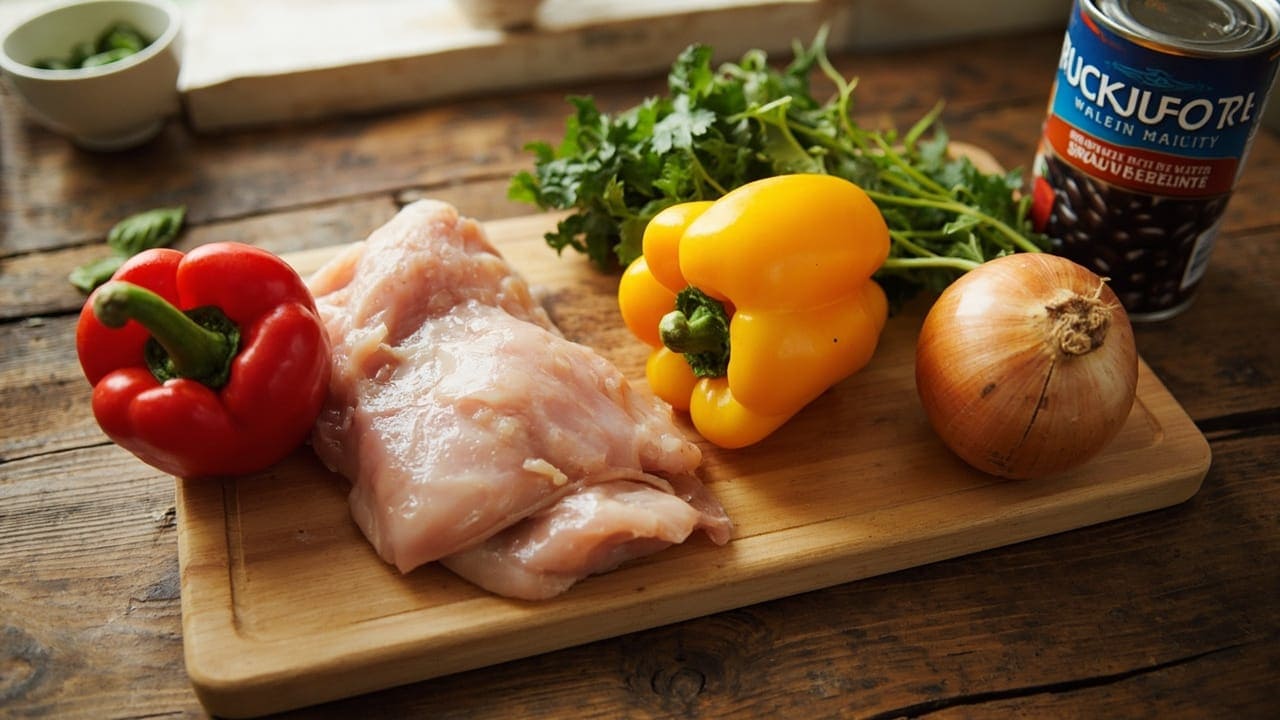
five ingredient dinners on a wooden kitchen table ready for weeknight cooking

Most people who want to lose weight already know they should cook more. The barrier is not knowledge. The barrier is the mental load of deciding what to make, then dragging five bags of groceries home, then washing three pans at 9 p.m.

Five ingredient dinners solve each step. Short list. Short prep.

Short cleanup. The framework below is built around the Harvard healthy eating plate, USDA MyPlate portions, and Mayo Clinic guidance on home cooking for weight management, so the meals are nutritionally sound, not just convenient.

What Five Ingredient Dinners Look Like (And Why They Work)
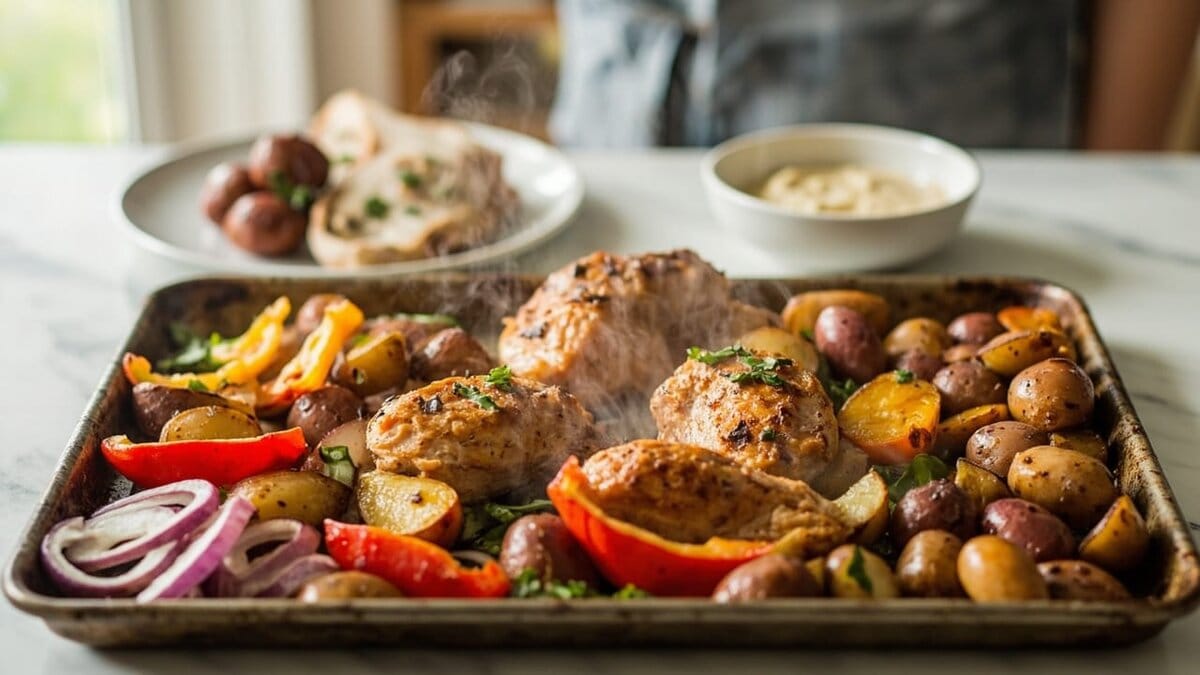
five ingredient sheet pan dinner with chicken and vegetables ready to roast

A five ingredient dinner is a meal built from five fresh or packaged components that go in the pan or pot, not five total items in the kitchen.

That is the whole framework.

Salt, pepper, cooking oil, water, and basic dried spices do not count, because they are pantry staples you already own. What counts is the chicken breast, the onion, the jar of salsa, the can of black beans, and the bell pepper.

That is five. Everything else you own can join in.

This framing matters because it removes the false math that derails most attempts at minimal cooking. A recipe that says “five ingredients” but lists onion, garlic, salt, pepper, and oil is really a one-ingredient recipe dressed up with seasoning. The real test is: how many things do I have to buy or pull from the fridge to make this happen?

The answer for a five ingredient dinner is five. No more.

USDA MyPlate meal planning frames meals around five food groups: fruits, vegetables, grains, protein, and dairy.

A dinner that hits three of those groups in five ingredients is balanced and complete. Most of the dinners in the rotation below hit four groups, including a lean protein, a non-starchy vegetable, a whole grain or starchy vegetable, and a flavor driver like cheese, salsa, or tahini.

That composition matches the Harvard healthy eating plate guidance for adult dinners.

The CDC links regular home cooking to lower BMI in adults, and the effect is strongest when dinners are portion-controlled and vegetable-forward. Five ingredient dinners make that pattern easy to repeat because the repetition itself is the win. The first dinner you make takes 30 minutes.

The third dinner you make takes 12, becaus

2. Prioritize Whole Food Nutrition

n’t Count Toward the Five

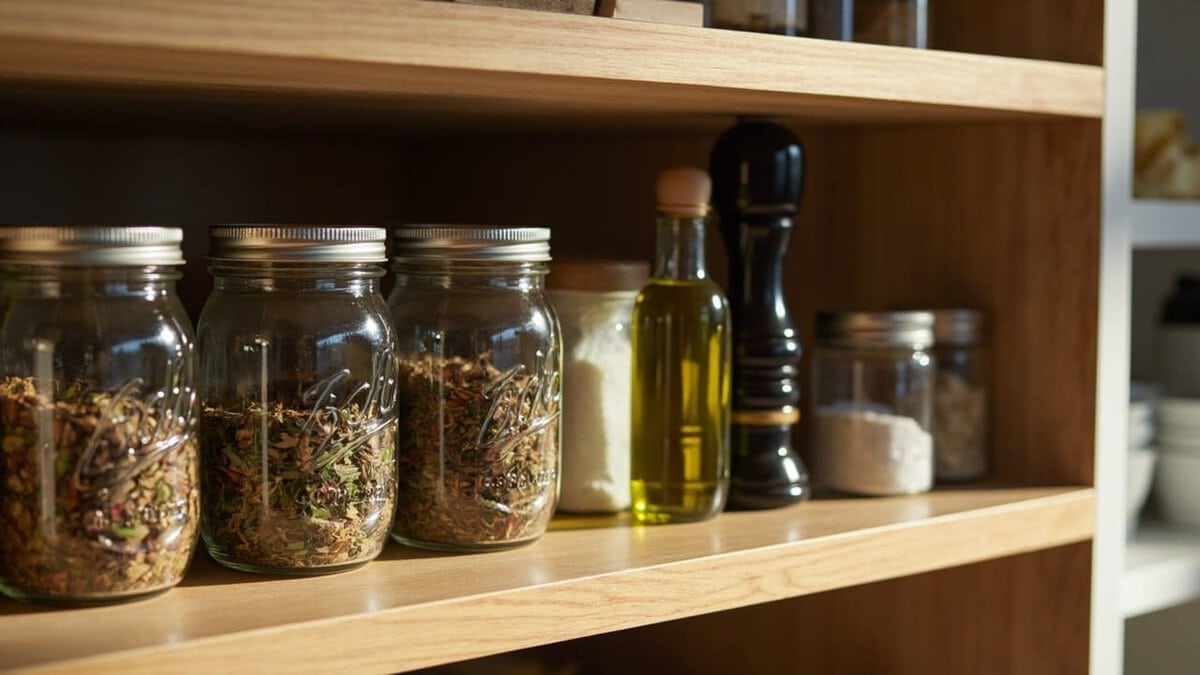
The reason five ingredient dinners work is the pantry underneath them. Salt, pepper, olive oil, neutral cooking oil, butter, water, and a small set of dried herbs and spices are assumed to be in every kitchen. If they are, you can build hundreds of five ingredient dinners from a short shopping list of fresh and packaged ingredients.

The pantry category also covers a few extras people forget to count: vinegar (balsamic, white, rice), soy sauce or tamari, mustard (Dijon and yellow), honey, garlic, and fresh ginger.

Mayo Clinic nutrition guidance treats these as flavor foundations, not as ingredients, because a teaspoon or a tablespoon goes a long way and they sit in the door of the fridge for months.

Treat them as utilities.

The other pantry move that unlocks five ingredient dinners is keeping one or two “boosters” on hand. A jar of green curry paste. A tube of tomato paste.

A small can of chipotles in adobo. A bottle of fish sauce. A wedge of Parmesan.

Each one is pantry-stable, each one carries an entire cuisine in a teaspoon. Each one lets a plain protein and vegetable become dinner. The rotation later in the article leans on these boosters hard.

Here is the working pantry list for the rotation below. Adjust to taste, but keep it short: salt, pepper, olive oil, neutral oil, butter, garlic, fresh ginger, soy sauce, Dijon mustard, balsamic vinegar, red pepper flakes, dried oregano, dried thyme, smoked paprika, ground cumin, tomato paste, green curry paste, chipotles in adobo, fish sauce, and Parmesan. That is the foundation.

The five ingredient dinners add the proteins, vegetables, starches, and flavor drivers on top.

Five Ingredient Dinners: A 7-Day Rotation
five ingredient dinners pantry staples including herbs spices oil and salt

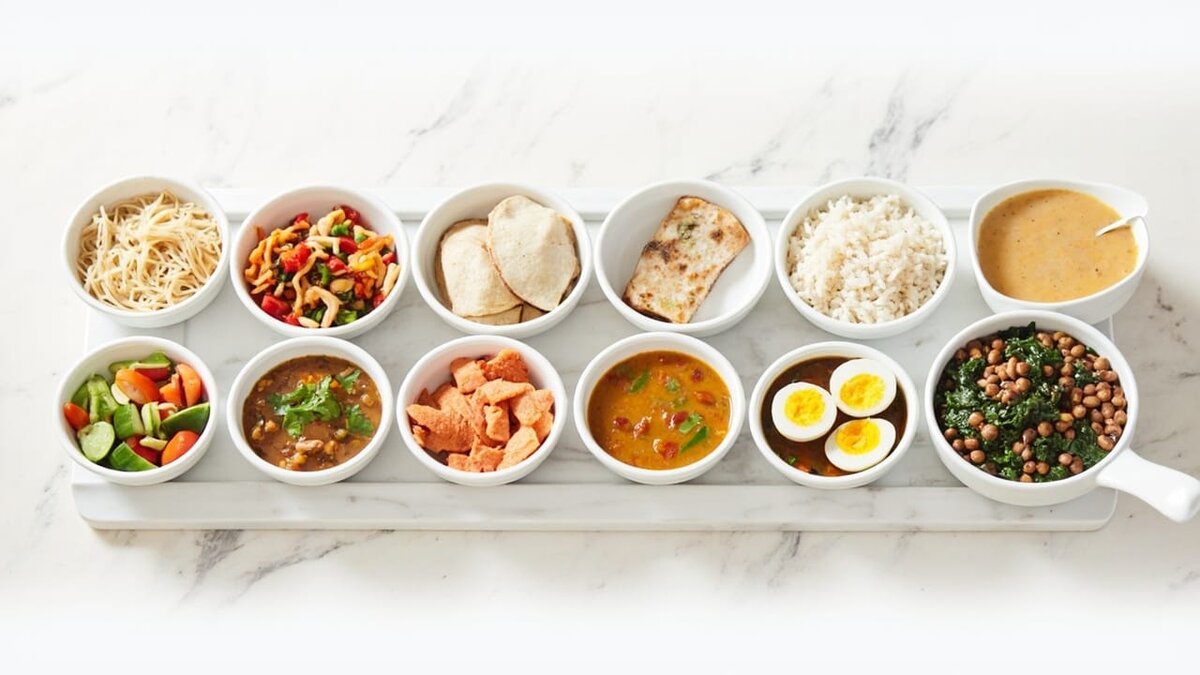
The rotation below is built so each dinner reuses a leftover ingredient from the night before, which keeps total shopping low.

Monday’s chicken becomes Wednesday’s topping. Tuesday’s roasted vegetables become Thursday’s grain bowl.

The goal is seven dinners that share a shopping list and a few common prep steps.

All portions are sized for one person. Double or quadruple each ingredient if you cook for a household. The protein amounts follow USDA MyPlate proportions: about a quarter of the plate is lean protein, another quarter is a whole grain or starchy vegetable, and half the plate is non-starchy vegetables.

Monday: Sheet Pan Chicken and Vegetables

Five ingredients: one chicken thigh (bone-in, skin-on), one cup of broccoli florets, one cup of baby potatoes (halved), two tablespoons of olive oil, two tablespoons of Dijon mustard. Roast at 425°F for 35 minutes. The mustard and oil mix acts as the marinade, the broccoli crisps at the edge, the potatoes get tender in the middle.

This sheet pan dinner hits four of the five USDA MyPlate groups in five ingredients, which is exactly the balance the framework calls for. The chicken thigh stays juicy at high heat. The broccoli is the non-starchy vegetable.

The potatoes are the starchy carbohydrate. The mustard provides acid and sharpness so you don’t need a sauce.

Tuesday: One-Pan Salmon and Lentils

Five ingredients: one salmon fillet (4 to 6 ounces), one cup of pre-cooked lentils, two cups of baby spinach, one lemon, two tablespoons of olive oil. Sear the salmon skin-side down for 4 minutes, flip, add the spinach and lentils to the same pan, finish with lemon juice. The spinach wilts into the lentils, the salmon flakes on top.

Lentils are the unsung protein-and-fiber partner for salmon. They fill the starchy slot without being a grain, and they reheat well.

They cook from a can or a pouch in under five minutes. The Harvard healthy eating plate puts fish twice a week as a baseline for adult dinners, and the rotation puts it here on Tuesday so the shopping list can cover one large fillet for the whole week.

Wednesday: Leftover Chicken Tacos

Five ingredients: leftover Monday chicken (shredded), one cup of shredded cabbage, one avocado, four corn tortillas, two tablespoons of salsa verde. Warm the tortillas, pile the chicken and cabbage, top with avocado and salsa verde. The cabbage adds the crunch and the fiber, the avocado adds the fat, the salsa verde adds the acid.

Wednesday tacos are the cheapest dinner of the week because nothing new needs to be cooked. The chicken is already roasted, the avocado just needs slicing, the cabbage can be bought pre-shredded. If you have a wedge of cotija in the fridge, crumble it on top, but cotija is not in the five.

It is a pantry-adjacent topping.

Thursday: Vegetable and Chickpea Grain Bowl

Five ingredients: one cup of cooked farro (or brown rice), one can of chickpeas (drained), one cup of roasted sweet potato (cubed), two cups of arugula, two tablespoons of tahini.

Whisk the tahini with lemon juice and water for the dressing, then pile everything on a plate. The farro is the grain, the chickpeas are the protein, the sweet potato is the starch, the arugula is the green, and the tahini ties it together.

Sweet potato and chickpea grain bowls are the most flexible entry in the rotation. Swap farro for quinoa. Swap arugula for baby kale.

Swap sweet potato for roasted butternut squash in the fall. The five ingredient dinners framework is meant to tolerate those swaps without losing the structure.

Friday: Sheet Pan Shrimp and Peppers

Five ingredients: half a pound of shrimp (peeled), two bell peppers (sliced), one cup of cherry tomatoes, two tablespoons of olive oil, two cloves of garlic (smashed). Roast at 425°F for 12 minutes. The shrimp cook fast, the peppers blister, the tomatoes collapse into a quick pan sauce.

Serve over rice if you have leftover Thursday farro, or eat as a bowl.

Friday shrimp is the fastest dinner of the week at under 15 minutes total. The trick is high heat and not overcooking the shrimp. Pull the pan when the shrimp are just opaque and curled.

They keep cooking on the hot sheet pan for another minute out of the oven.

Saturday: One-Pot Tomato and White Bean Soup

Five ingredients: one can of crushed tomatoes, one can of cannellini beans (drained), one onion (diced), four cups of vegetable broth, two tablespoons of olive oil. Sauté the onion in olive oil for 5 minutes, add the tomatoes, beans, and broth, simmer for 20 minutes. Finish with salt, pepper, and a spoonful of Parmesan.

Tomato and white bean soup is the most forgiving entry in the rotation.

The onions can be diced the night before, the broth can be swapped for water with a bouillon cube, and the beans can be swapped for any white bean you have on hand. Mayo Clinic puts bean-forward dinners on its list of heart-healthy staples, and this version fits the five ingredient dinners framework exactly.

Sunday: Roast Chicken and Vegetables (Batch Cook)

Five ingredients: one whole chicken (about 4 pounds), two pounds of mixed root vegetables (carrots, parsnips, potatoes), one lemon, two tablespoons of olive oil, two tablespoons of fresh herbs (rosemary or thyme). Roast at 400°F for 75 minutes. Use the leftover chicken for Monday’s tacos and Tuesday’s grain bowl.

Sunday is the batch cook day. The whole chicken pulls double duty for Monday and Tuesday, the roasted root vegetables stretch into Wednesday’s taco filling and Thursday’s grain bowl, and the pan drippings make a quick gravy for any leftover starches. This is the dinner that pays for the rest of the week.

Rotation beats willpower.

Plan once. Eat all week.

How to Stock a Kitchen for Five Ingredient Dinners
five ingredient dinners seven day rotation with simple protein and vegetable pairings

The shopping list below covers the entire seven-day rotation above. The total ingredient count is 28 fresh and packaged items plus the pantry from earlier. The cost per dinner averages under $4 per serving at US grocery prices in 2026, well below the USDA estimate for a dinner cooked at home and a fraction of restaurant delivery.

Group the list by store section to keep the trip short. Produce: broccoli, baby potatoes, baby spinach, cabbage, avocado, lemon, garlic, sweet potato, arugula, bell peppers, cherry tomatoes, onion, mixed root vegetables. Protein: chicken thighs, salmon fillet, whole chicken, shrimp, eggs (optional backup).

Pantry: Dijon mustard, salsa verde, tahini, farro, brown rice, crushed tomatoes, cannellini beans, chickpeas, lentils, olive oil. That is the full list.

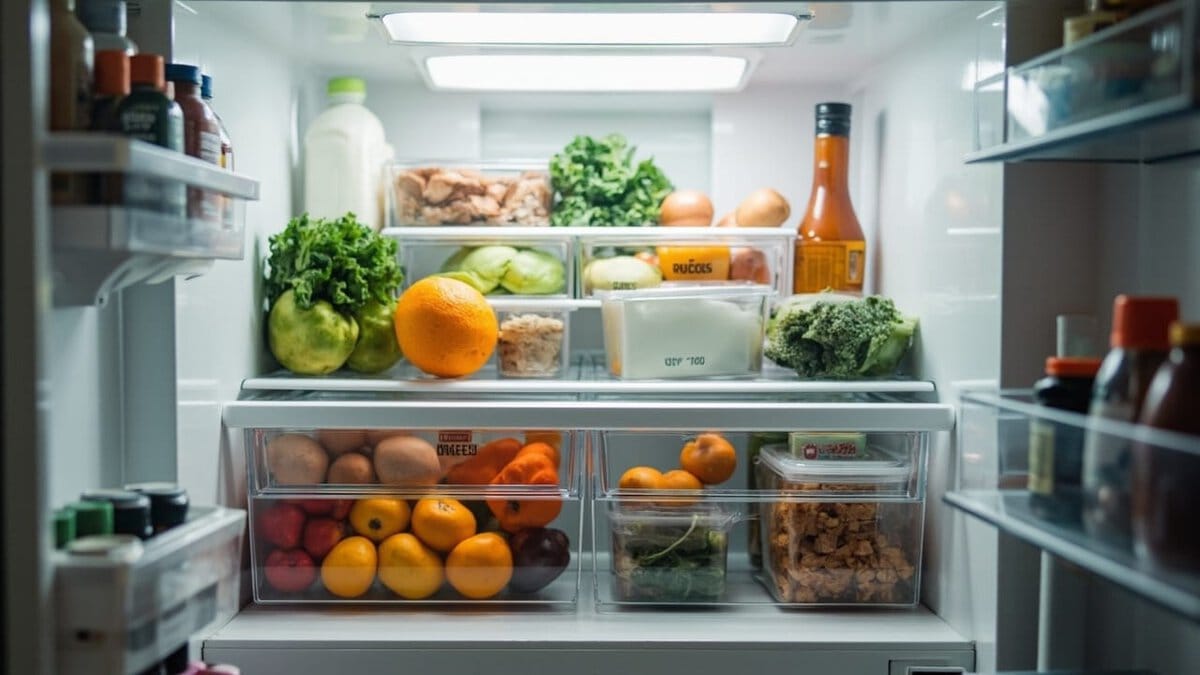
Storage strategy matters as much as the list. Pre-cooked lentils and canned beans go in the pantry. Pre-shredded cabbage lasts a week in the crisper.

Cooked farro and brown rice keep four days in the fridge in a sealed container. Roasted vegetables hold three days. Cooked chicken holds three days.

Shrimp are best cooked fresh.

The freezer is the secret weapon for five ingredient dinners. Buy chicken thighs in bulk and freeze in two-portion bags. Stock frozen shrimp for emergency Friday.

Keep a bag of frozen broccoli for backup. Mayo Clinic nutrition guidance points out that frozen vegetables are nutritionally equivalent to fresh and dramatically cut food waste, which matters when you are cooking for one or two and shopping for seven dinners.

Simplicity beats complexity.

Five Ingredient Dinners: Mistakes That Sabotage Weight Loss

These quick dinners are not automatically weight-loss dinners. The framework makes cooking easier, but the same five ingredients can be a 400-calorie dinner or a 900-calorie dinner depending on the choices inside the framework. The mistakes below are the ones that quietly push five ingredient dinners out of the weight-loss lane.
five ingredient dinners stocked refrigerator with eggs produce and prepped ingredients

Mistake 1: Counting Cheese and Oil as “Free”

Cheese and oil are the most calorie-dense ingredients in any five ingredient dinner. A quarter cup of shredded cheese is 110 calories. Two tablespoons of olive oil is 240 calories.

Both can fit inside the framework and still produce a 700-calorie dinner if you are not measuring. The fix is to count the oil in your daily budget, not in the five. Use one tablespoon of oil for sautéing and one tablespoon for finishing.

That gives you 240 calories of fat from oil, which is enough for flavor.

Mistake 2: Skipping the Vegetable Slot

When the five ingredients are a protein, a starch, a fat, and two flavor drivers, the dinner is missing the half of the plate the Harvard healthy eating plate assigns to vegetables.

The result is a calorie-dense meal that leaves you hungry an hour later. The fix is to make one of the five a non-starchy vegetable you actually want to eat, then build the flavor around it.

Mistake 3: Using Five Ingredient Dinners as a License to Skip Protein

Vegetarian five ingredient dinners are easy to build around beans and grains, and they are excellent for fiber.

They are also easy to under-build on protein, which leaves you hungry and stalls weight loss. The CDC’s adult protein guidance is roughly 0.8 grams per kilogram of body weight per day, which means a 70 kg adult needs about 56 grams per day.

A dinner that contributes 20 to 25 grams of protein is doing its job. Anything less and you are running a deficit by bedtime.

Mistake 4: Eating Five Ingredient Dinners Without a Portion Reference

USDA MyPlate makes portions visual: half the plate is vegetables and fruit, a quarter is protein, a quarter is grains or starch. A dinner built to that template is naturally portion-controlled because the plate is the portion. The mistake is serving the same five ingredients over a bed of rice that takes up two-thirds of the plate.

The fix is to plate by sections, not by piling.

Mistake 5: Forgetting That Five Ingredient Dinners Still Need Variety

The rotation above is seven dinners across seven cuisines (American roast, Mediterranean, Mexican, Mediterranean grain bowl, Mediterranean sheet pan, Italian soup, French roast).

That is the variety floor. A five ingredient dinner rotation that runs chicken and broccoli, chicken and rice, chicken and peppers, chicken and sweet potato is technically five ingredient dinners but it is one dinner in five outfits.

The rotation breaks weight loss because the monotony drives takeout on day four.

FAQ: Five Ingredient Dinners

The questions below cover the practical edges of running five ingredient dinners as a real rotation for weight loss, family cooking, and budget control.

Are five ingredient dinners actually healthy?

Yes, when the five ingredients include a lean protein, a non-starchy vegetable, a whole grain or starchy vegetable, a healthy fat, and a flavor driver.

That composition matches USDA MyPlate portions and Harvard’s healthy eating plate guidance. Five ingredient dinners that lean on refined carbs, processed meats, or heavy cheese can be calorie-dense and nutrient-poor, so the framework is a tool, not a guarantee.

How many calories are in a typical five ingredient dinner?

A balanced five ingredient dinner lands between 400 and 600 calories per serving. The sheet pan chicken and vegetables dinner runs about 480 calories. The salmon and lentils dinner is around 520 calories.

The chickpea grain bowl with tahini is closer to 540 calories. The range depends on the oil and cheese amounts, which is why mistake 1 above matters.

Can five ingredient dinners help with weight loss?

Five ingredient dinners help with weight loss because the short shopping list makes home cooking repeatable, and the framework makes portion control automatic. CDC data shows adults who cook at home most nights have a lower average BMI than adults who eat out most nights. The five ingredient framework removes the friction that drives takeout, which is the real lever.

What are the best five ingredient dinners for beginners?

The sheet pan chicken and vegetables, the one-pot tomato and white bean soup, and the salmon and lentils dinner are the three best five ingredient dinners for beginners because they use one pan, one oven temperature, and forgiving ingredients. Sheet pan dinners in particular have a near-zero failure rate because the oven does the work.

Can I meal prep five ingredient dinners?

Yes. Sunday’s whole roast chicken and Wednesday’s shredded cabbage tacos are built around batch cooking, and the Thursday grain bowl is built around Tuesday’s leftover lentils. The freezer strategy earlier in the article covers how to stage proteins so each night takes 15 minutes or less of active cooking.

Are five ingredient dinners good for families with kids?

Yes, with one adjustment: build the plate around the kids’ protein first, then add the vegetable as a side. Sheet pan chicken and vegetables is the most kid-friendly entry because the chicken can be removed early and the vegetables can be cut smaller. The taco night is the easiest family dinner because each kid builds their own.

Do five ingredient dinners work on a tight grocery budget?

Yes. The seven-day rotation above averages under $4 per serving at 2026 US grocery prices, which is below the USDA estimate for a home-cooked dinner and a fraction of restaurant delivery. The biggest savings come from cooking a whole chicken on Sunday and reusing it through the week.

Conclusion

The whole framework is built around a simple pattern, not a recipe list.

The framework is: a lean protein, a non-starchy vegetable, a starch or grain, a healthy fat, and a flavor driver, in roughly USDA portions, cooked in one pan or one pot. That framework holds whether you are running the seven-day rotation above, building your own rotation, or improvising from whatever is in the fridge on a Tuesday night.

The benefits are practical. Short shopping list. Short prep.

Short cleanup. Repeatable enough that home cooking becomes the default instead of the exception. The CDC’s home-cooking correlation, Harvard’s healthy eating plate, and Mayo Clinic’s portion guidance all point to the same pattern: adults who cook simple, balanced dinners most nights have better long-term weight outcomes than adults who rely on takeout.

Start with one dinner from the rotation. Sheet pan chicken and vegetables is the easiest entry because the oven does the work and the cleanup is one sheet pan. Once that one is repeatable, add the salmon and lentils dinner.

Then the soup. Within three weeks the rotation becomes the default and the takeout habit fades. That is the real win.

Five ingredient dinners work best when paired with a meal-prep habit and a few core recipes. The articles below cover the supporting pieces.

Sources: USDA MyPlate, Harvard T.H. Chan School of Public Health, Mayo Clinic, CDC Healthy Weight, NIH MedlinePlus.

Authoritative Sources

This guide references research and recommendations from the CDC Division of Nutrition, Physical Activity, and Obesity, the NIH National Heart, Lung, and Blood Institute, and Mayo Clinic Weight Loss resources. For deeper review, see peer-reviewed studies on PubMed and guidance from Harvard T.H. Chan School of Public Health.

Subscribe

Five Ingredient Dinners: 7 Proven, Delicious Recipes for 2026

five ingredient dinners on a wooden kitchen table ready for weeknight cooking

Five ingredient dinners cut weeknight cooking down to the parts that actually matter: protein, vegetables, a starch, a fat, and a flavor hit. When the shopping list is short, the prep is short, the cleanup is short, and the odds that you actually cook instead of ordering delivery go up dramatically.

This guide builds a working rotation of five ingredient dinners you can make tonight, then walks through how to stock the kitchen so the rotation never breaks.

five ingredient dinners on a wooden kitchen table ready for weeknight cooking

Most people who want to lose weight already know they should cook more. The barrier is not knowledge. The barrier is the mental load of deciding what to make, then dragging five bags of groceries home, then washing three pans at 9 p.m.

Five ingredient dinners solve each step. Short list. Short prep.

Short cleanup. The framework below is built around the Harvard healthy eating plate, USDA MyPlate portions, and Mayo Clinic guidance on home cooking for weight management, so the meals are nutritionally sound, not just convenient.

What Five Ingredient Dinners Look Like (And Why They Work)

five ingredient sheet pan dinner with chicken and vegetables ready to roast

A five ingredient dinner is a meal built from five fresh or packaged components that go in the pan or pot, not five total items in the kitchen.

That is the whole framework.

Salt, pepper, cooking oil, water, and basic dried spices do not count, because they are pantry staples you already own. What counts is the chicken breast, the onion, the jar of salsa, the can of black beans, and the bell pepper.

That is five. Everything else you own can join in.

This framing matters because it removes the false math that derails most attempts at minimal cooking. A recipe that says “five ingredients” but lists onion, garlic, salt, pepper, and oil is really a one-ingredient recipe dressed up with seasoning. The real test is: how many things do I have to buy or pull from the fridge to make this happen?

The answer for a five ingredient dinner is five. No more.

USDA MyPlate meal planning frames meals around five food groups: fruits, vegetables, grains, protein, and dairy.

A dinner that hits three of those groups in five ingredients is balanced and complete. Most of the dinners in the rotation below hit four groups, including a lean protein, a non-starchy vegetable, a whole grain or starchy vegetable, and a flavor driver like cheese, salsa, or tahini.

That composition matches the Harvard healthy eating plate guidance for adult dinners.

The CDC links regular home cooking to lower BMI in adults, and the effect is strongest when dinners are portion-controlled and vegetable-forward. Five ingredient dinners make that pattern easy to repeat because the repetition itself is the win. The first dinner you make takes 30 minutes.

The third dinner you make takes 12, becaus

2. Prioritize Whole Food Nutrition

n’t Count Toward the Five

The reason five ingredient dinners work is the pantry underneath them. Salt, pepper, olive oil, neutral cooking oil, butter, water, and a small set of dried herbs and spices are assumed to be in every kitchen. If they are, you can build hundreds of five ingredient dinners from a short shopping list of fresh and packaged ingredients.

The pantry category also covers a few extras people forget to count: vinegar (balsamic, white, rice), soy sauce or tamari, mustard (Dijon and yellow), honey, garlic, and fresh ginger.

Mayo Clinic nutrition guidance treats these as flavor foundations, not as ingredients, because a teaspoon or a tablespoon goes a long way and they sit in the door of the fridge for months.

Treat them as utilities.

The other pantry move that unlocks five ingredient dinners is keeping one or two “boosters” on hand. A jar of green curry paste. A tube of tomato paste.

A small can of chipotles in adobo. A bottle of fish sauce. A wedge of Parmesan.

Each one is pantry-stable, each one carries an entire cuisine in a teaspoon. Each one lets a plain protein and vegetable become dinner. The rotation later in the article leans on these boosters hard.

Here is the working pantry list for the rotation below. Adjust to taste, but keep it short: salt, pepper, olive oil, neutral oil, butter, garlic, fresh ginger, soy sauce, Dijon mustard, balsamic vinegar, red pepper flakes, dried oregano, dried thyme, smoked paprika, ground cumin, tomato paste, green curry paste, chipotles in adobo, fish sauce, and Parmesan. That is the foundation.

The five ingredient dinners add the proteins, vegetables, starches, and flavor drivers on top.

Five Ingredient Dinners: A 7-Day Rotation

five ingredient dinners pantry staples including herbs spices oil and salt

The rotation below is built so each dinner reuses a leftover ingredient from the night before, which keeps total shopping low.

Monday’s chicken becomes Wednesday’s topping. Tuesday’s roasted vegetables become Thursday’s grain bowl.

The goal is seven dinners that share a shopping list and a few common prep steps.

All portions are sized for one person. Double or quadruple each ingredient if you cook for a household. The protein amounts follow USDA MyPlate proportions: about a quarter of the plate is lean protein, another quarter is a whole grain or starchy vegetable, and half the plate is non-starchy vegetables.

Monday: Sheet Pan Chicken and Vegetables

Five ingredients: one chicken thigh (bone-in, skin-on), one cup of broccoli florets, one cup of baby potatoes (halved), two tablespoons of olive oil, two tablespoons of Dijon mustard. Roast at 425°F for 35 minutes. The mustard and oil mix acts as the marinade, the broccoli crisps at the edge, the potatoes get tender in the middle.

This sheet pan dinner hits four of the five USDA MyPlate groups in five ingredients, which is exactly the balance the framework calls for. The chicken thigh stays juicy at high heat. The broccoli is the non-starchy vegetable.

The potatoes are the starchy carbohydrate. The mustard provides acid and sharpness so you don’t need a sauce.

Tuesday: One-Pan Salmon and Lentils

Five ingredients: one salmon fillet (4 to 6 ounces), one cup of pre-cooked lentils, two cups of baby spinach, one lemon, two tablespoons of olive oil. Sear the salmon skin-side down for 4 minutes, flip, add the spinach and lentils to the same pan, finish with lemon juice. The spinach wilts into the lentils, the salmon flakes on top.

Lentils are the unsung protein-and-fiber partner for salmon. They fill the starchy slot without being a grain, and they reheat well.

They cook from a can or a pouch in under five minutes. The Harvard healthy eating plate puts fish twice a week as a baseline for adult dinners, and the rotation puts it here on Tuesday so the shopping list can cover one large fillet for the whole week.

Wednesday: Leftover Chicken Tacos

Five ingredients: leftover Monday chicken (shredded), one cup of shredded cabbage, one avocado, four corn tortillas, two tablespoons of salsa verde. Warm the tortillas, pile the chicken and cabbage, top with avocado and salsa verde. The cabbage adds the crunch and the fiber, the avocado adds the fat, the salsa verde adds the acid.

Wednesday tacos are the cheapest dinner of the week because nothing new needs to be cooked. The chicken is already roasted, the avocado just needs slicing, the cabbage can be bought pre-shredded. If you have a wedge of cotija in the fridge, crumble it on top, but cotija is not in the five.

It is a pantry-adjacent topping.

Thursday: Vegetable and Chickpea Grain Bowl

Five ingredients: one cup of cooked farro (or brown rice), one can of chickpeas (drained), one cup of roasted sweet potato (cubed), two cups of arugula, two tablespoons of tahini.

Whisk the tahini with lemon juice and water for the dressing, then pile everything on a plate. The farro is the grain, the chickpeas are the protein, the sweet potato is the starch, the arugula is the green, and the tahini ties it together.

Sweet potato and chickpea grain bowls are the most flexible entry in the rotation. Swap farro for quinoa. Swap arugula for baby kale.

Swap sweet potato for roasted butternut squash in the fall. The five ingredient dinners framework is meant to tolerate those swaps without losing the structure.

Friday: Sheet Pan Shrimp and Peppers

Five ingredients: half a pound of shrimp (peeled), two bell peppers (sliced), one cup of cherry tomatoes, two tablespoons of olive oil, two cloves of garlic (smashed). Roast at 425°F for 12 minutes. The shrimp cook fast, the peppers blister, the tomatoes collapse into a quick pan sauce.

Serve over rice if you have leftover Thursday farro, or eat as a bowl.

Friday shrimp is the fastest dinner of the week at under 15 minutes total. The trick is high heat and not overcooking the shrimp. Pull the pan when the shrimp are just opaque and curled.

They keep cooking on the hot sheet pan for another minute out of the oven.

Saturday: One-Pot Tomato and White Bean Soup

Five ingredients: one can of crushed tomatoes, one can of cannellini beans (drained), one onion (diced), four cups of vegetable broth, two tablespoons of olive oil. Sauté the onion in olive oil for 5 minutes, add the tomatoes, beans, and broth, simmer for 20 minutes. Finish with salt, pepper, and a spoonful of Parmesan.

Tomato and white bean soup is the most forgiving entry in the rotation.

The onions can be diced the night before, the broth can be swapped for water with a bouillon cube, and the beans can be swapped for any white bean you have on hand. Mayo Clinic puts bean-forward dinners on its list of heart-healthy staples, and this version fits the five ingredient dinners framework exactly.

Sunday: Roast Chicken and Vegetables (Batch Cook)

Five ingredients: one whole chicken (about 4 pounds), two pounds of mixed root vegetables (carrots, parsnips, potatoes), one lemon, two tablespoons of olive oil, two tablespoons of fresh herbs (rosemary or thyme). Roast at 400°F for 75 minutes. Use the leftover chicken for Monday’s tacos and Tuesday’s grain bowl.

Sunday is the batch cook day. The whole chicken pulls double duty for Monday and Tuesday, the roasted root vegetables stretch into Wednesday’s taco filling and Thursday’s grain bowl, and the pan drippings make a quick gravy for any leftover starches. This is the dinner that pays for the rest of the week.

Rotation beats willpower.

Plan once. Eat all week.

How to Stock a Kitchen for Five Ingredient Dinners

five ingredient dinners seven day rotation with simple protein and vegetable pairings

The shopping list below covers the entire seven-day rotation above. The total ingredient count is 28 fresh and packaged items plus the pantry from earlier. The cost per dinner averages under $4 per serving at US grocery prices in 2026, well below the USDA estimate for a dinner cooked at home and a fraction of restaurant delivery.

Group the list by store section to keep the trip short. Produce: broccoli, baby potatoes, baby spinach, cabbage, avocado, lemon, garlic, sweet potato, arugula, bell peppers, cherry tomatoes, onion, mixed root vegetables. Protein: chicken thighs, salmon fillet, whole chicken, shrimp, eggs (optional backup).

Pantry: Dijon mustard, salsa verde, tahini, farro, brown rice, crushed tomatoes, cannellini beans, chickpeas, lentils, olive oil. That is the full list.

Storage strategy matters as much as the list. Pre-cooked lentils and canned beans go in the pantry. Pre-shredded cabbage lasts a week in the crisper.

Cooked farro and brown rice keep four days in the fridge in a sealed container. Roasted vegetables hold three days. Cooked chicken holds three days.

Shrimp are best cooked fresh.

The freezer is the secret weapon for five ingredient dinners. Buy chicken thighs in bulk and freeze in two-portion bags. Stock frozen shrimp for emergency Friday.

Keep a bag of frozen broccoli for backup. Mayo Clinic nutrition guidance points out that frozen vegetables are nutritionally equivalent to fresh and dramatically cut food waste, which matters when you are cooking for one or two and shopping for seven dinners.

Simplicity beats complexity.

Five Ingredient Dinners: Mistakes That Sabotage Weight Loss

These quick dinners are not automatically weight-loss dinners. The framework makes cooking easier, but the same five ingredients can be a 400-calorie dinner or a 900-calorie dinner depending on the choices inside the framework. The mistakes below are the ones that quietly push five ingredient dinners out of the weight-loss lane.

five ingredient dinners stocked refrigerator with eggs produce and prepped ingredients

Mistake 1: Counting Cheese and Oil as “Free”

Cheese and oil are the most calorie-dense ingredients in any five ingredient dinner. A quarter cup of shredded cheese is 110 calories. Two tablespoons of olive oil is 240 calories.

Both can fit inside the framework and still produce a 700-calorie dinner if you are not measuring. The fix is to count the oil in your daily budget, not in the five. Use one tablespoon of oil for sautéing and one tablespoon for finishing.

That gives you 240 calories of fat from oil, which is enough for flavor.

Mistake 2: Skipping the Vegetable Slot

When the five ingredients are a protein, a starch, a fat, and two flavor drivers, the dinner is missing the half of the plate the Harvard healthy eating plate assigns to vegetables.

The result is a calorie-dense meal that leaves you hungry an hour later. The fix is to make one of the five a non-starchy vegetable you actually want to eat, then build the flavor around it.

Mistake 3: Using Five Ingredient Dinners as a License to Skip Protein

Vegetarian five ingredient dinners are easy to build around beans and grains, and they are excellent for fiber.

They are also easy to under-build on protein, which leaves you hungry and stalls weight loss. The CDC’s adult protein guidance is roughly 0.8 grams per kilogram of body weight per day, which means a 70 kg adult needs about 56 grams per day.

A dinner that contributes 20 to 25 grams of protein is doing its job. Anything less and you are running a deficit by bedtime.

Mistake 4: Eating Five Ingredient Dinners Without a Portion Reference

USDA MyPlate makes portions visual: half the plate is vegetables and fruit, a quarter is protein, a quarter is grains or starch. A dinner built to that template is naturally portion-controlled because the plate is the portion. The mistake is serving the same five ingredients over a bed of rice that takes up two-thirds of the plate.

The fix is to plate by sections, not by piling.

Mistake 5: Forgetting That Five Ingredient Dinners Still Need Variety

The rotation above is seven dinners across seven cuisines (American roast, Mediterranean, Mexican, Mediterranean grain bowl, Mediterranean sheet pan, Italian soup, French roast).

That is the variety floor. A five ingredient dinner rotation that runs chicken and broccoli, chicken and rice, chicken and peppers, chicken and sweet potato is technically five ingredient dinners but it is one dinner in five outfits.

The rotation breaks weight loss because the monotony drives takeout on day four.

FAQ: Five Ingredient Dinners

The questions below cover the practical edges of running five ingredient dinners as a real rotation for weight loss, family cooking, and budget control.

Are five ingredient dinners actually healthy?

Yes, when the five ingredients include a lean protein, a non-starchy vegetable, a whole grain or starchy vegetable, a healthy fat, and a flavor driver.

That composition matches USDA MyPlate portions and Harvard’s healthy eating plate guidance. Five ingredient dinners that lean on refined carbs, processed meats, or heavy cheese can be calorie-dense and nutrient-poor, so the framework is a tool, not a guarantee.

How many calories are in a typical five ingredient dinner?

A balanced five ingredient dinner lands between 400 and 600 calories per serving. The sheet pan chicken and vegetables dinner runs about 480 calories. The salmon and lentils dinner is around 520 calories.

The chickpea grain bowl with tahini is closer to 540 calories. The range depends on the oil and cheese amounts, which is why mistake 1 above matters.

Can five ingredient dinners help with weight loss?

Five ingredient dinners help with weight loss because the short shopping list makes home cooking repeatable, and the framework makes portion control automatic. CDC data shows adults who cook at home most nights have a lower average BMI than adults who eat out most nights. The five ingredient framework removes the friction that drives takeout, which is the real lever.

What are the best five ingredient dinners for beginners?

The sheet pan chicken and vegetables, the one-pot tomato and white bean soup, and the salmon and lentils dinner are the three best five ingredient dinners for beginners because they use one pan, one oven temperature, and forgiving ingredients. Sheet pan dinners in particular have a near-zero failure rate because the oven does the work.

Can I meal prep five ingredient dinners?

Yes. Sunday’s whole roast chicken and Wednesday’s shredded cabbage tacos are built around batch cooking, and the Thursday grain bowl is built around Tuesday’s leftover lentils. The freezer strategy earlier in the article covers how to stage proteins so each night takes 15 minutes or less of active cooking.

Are five ingredient dinners good for families with kids?

Yes, with one adjustment: build the plate around the kids’ protein first, then add the vegetable as a side. Sheet pan chicken and vegetables is the most kid-friendly entry because the chicken can be removed early and the vegetables can be cut smaller. The taco night is the easiest family dinner because each kid builds their own.

Do five ingredient dinners work on a tight grocery budget?

Yes. The seven-day rotation above averages under $4 per serving at 2026 US grocery prices, which is below the USDA estimate for a home-cooked dinner and a fraction of restaurant delivery. The biggest savings come from cooking a whole chicken on Sunday and reusing it through the week.

Conclusion

The whole framework is built around a simple pattern, not a recipe list.

The framework is: a lean protein, a non-starchy vegetable, a starch or grain, a healthy fat, and a flavor driver, in roughly USDA portions, cooked in one pan or one pot. That framework holds whether you are running the seven-day rotation above, building your own rotation, or improvising from whatever is in the fridge on a Tuesday night.

The benefits are practical. Short shopping list. Short prep.

Short cleanup. Repeatable enough that home cooking becomes the default instead of the exception. The CDC’s home-cooking correlation, Harvard’s healthy eating plate, and Mayo Clinic’s portion guidance all point to the same pattern: adults who cook simple, balanced dinners most nights have better long-term weight outcomes than adults who rely on takeout.

Start with one dinner from the rotation. Sheet pan chicken and vegetables is the easiest entry because the oven does the work and the cleanup is one sheet pan. Once that one is repeatable, add the salmon and lentils dinner.

Then the soup. Within three weeks the rotation becomes the default and the takeout habit fades. That is the real win.

Five ingredient dinners work best when paired with a meal-prep habit and a few core recipes. The articles below cover the supporting pieces.

Sources: USDA MyPlate, Harvard T.H. Chan School of Public Health, Mayo Clinic, CDC Healthy Weight, NIH MedlinePlus.

Authoritative Sources

This guide references research and recommendations from the CDC Division of Nutrition, Physical Activity, and Obesity, the NIH National Heart, Lung, and Blood Institute, and Mayo Clinic Weight Loss resources. For deeper review, see peer-reviewed studies on PubMed and guidance from Harvard T.H. Chan School of Public Health.

Medical Disclaimer: This article is for informational purposes only and does not constitute medical advice. Consult a qualified healthcare provider before starting any weight loss program.

Share: T f in @

Get More Articles Like This

Join 45,000+ readers. Weekly expert-reviewed weight loss advice.

45K+Subscribers
180+Articles
3Experts